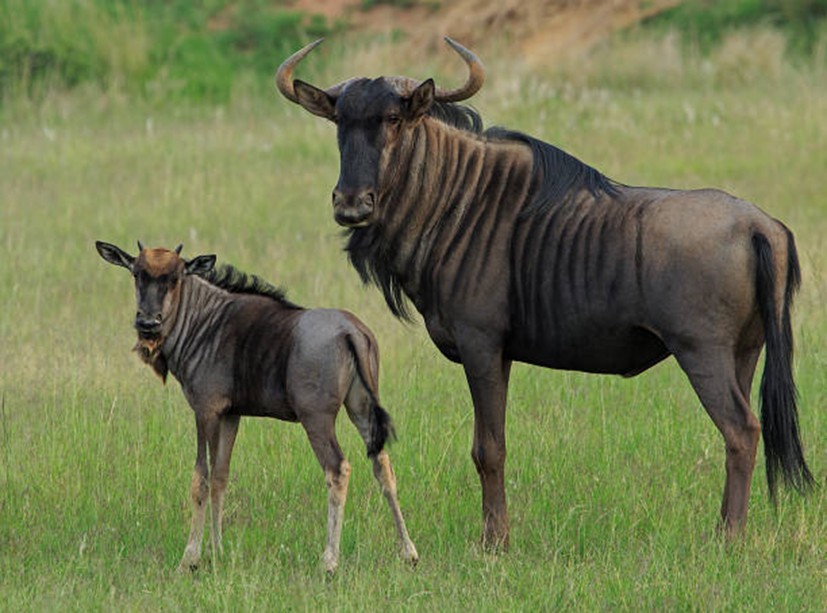
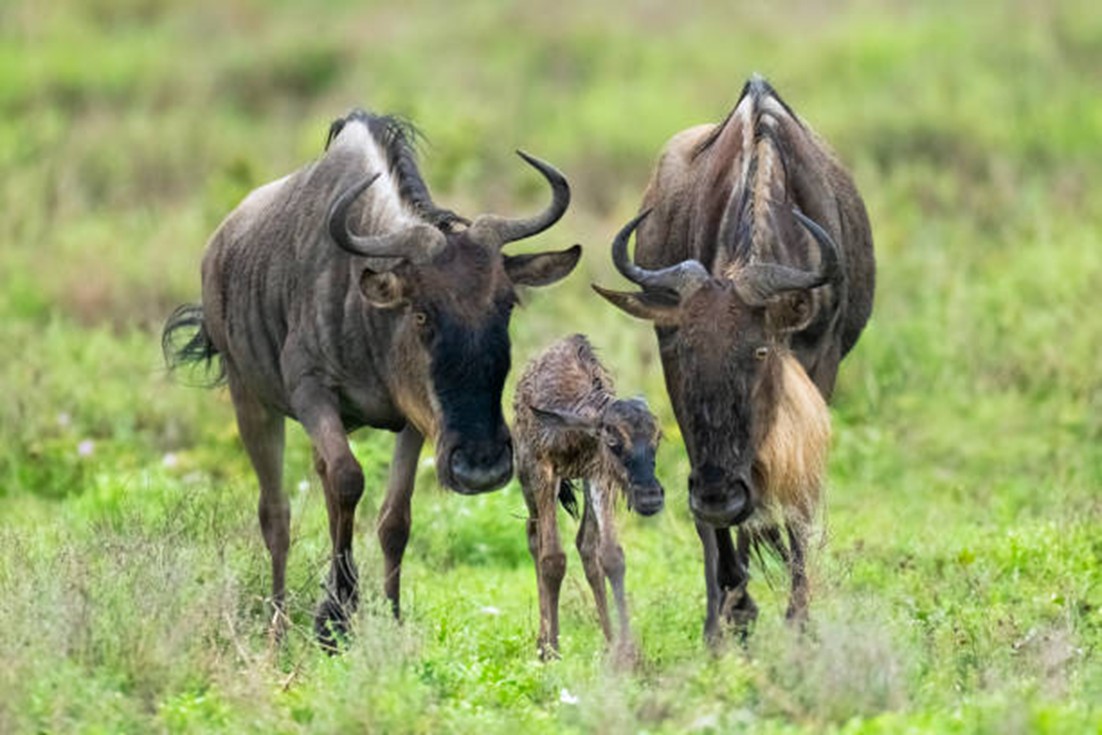
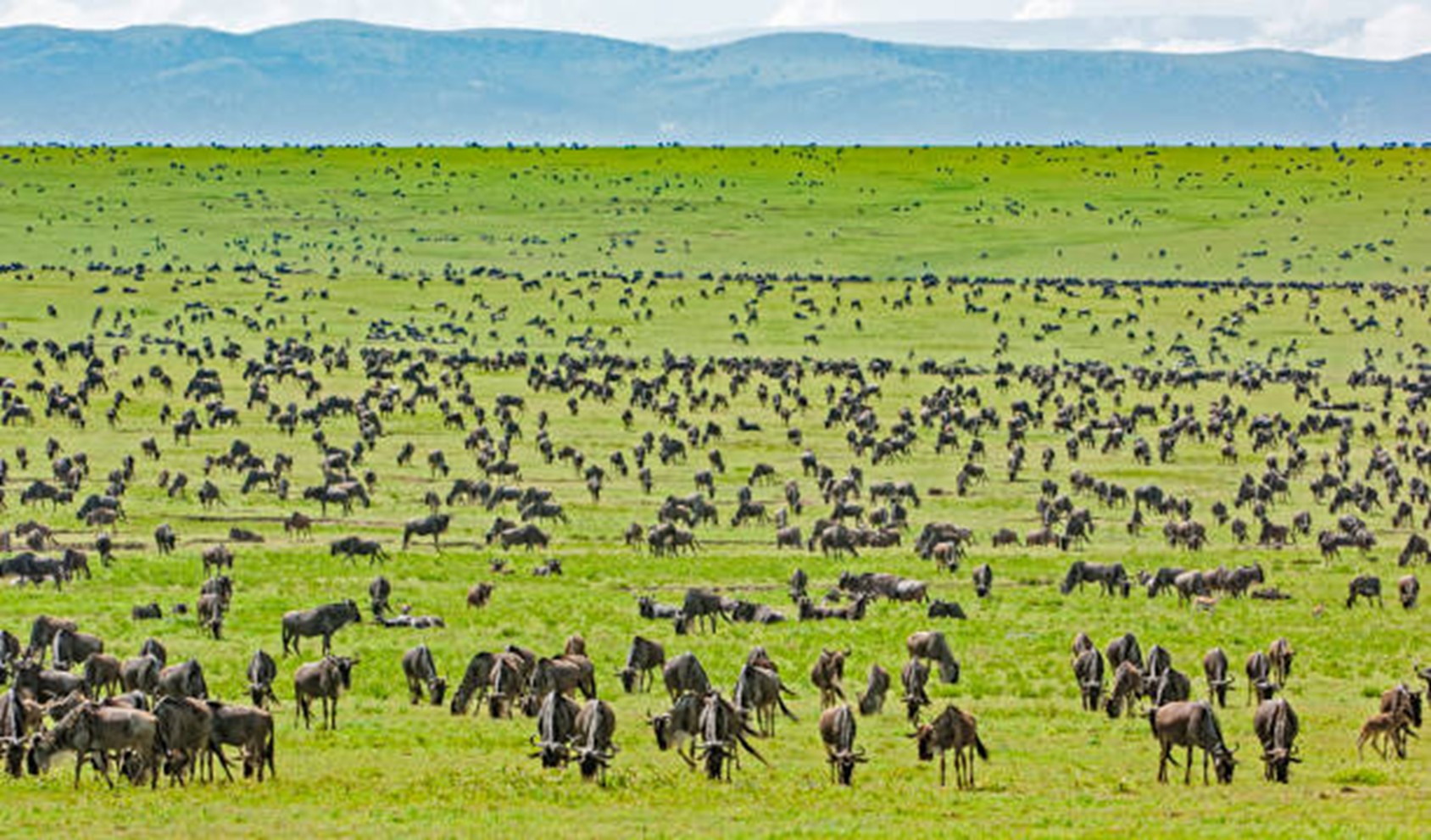
From late January to March, the Southern Serengeti and Ndutu plains come alive. This is when over half a million wildebeest gather to give birth. The green plains turn into a huge nursery, with thousands of calves born every day.
Within minutes, the newborns stand and start walking beside their mothers. The rains bring fresh grass, giving plenty of food for the mothers and babies. By May, as the land begins to dry, the herds start moving north toward Central Serengeti, following the rain and new grass. Every wildebeest is born here in Tanzania—true children of the Serengeti.
May–June
The Wildebeest Rut – Central Serengeti
The Serengeti Comes Alive!!
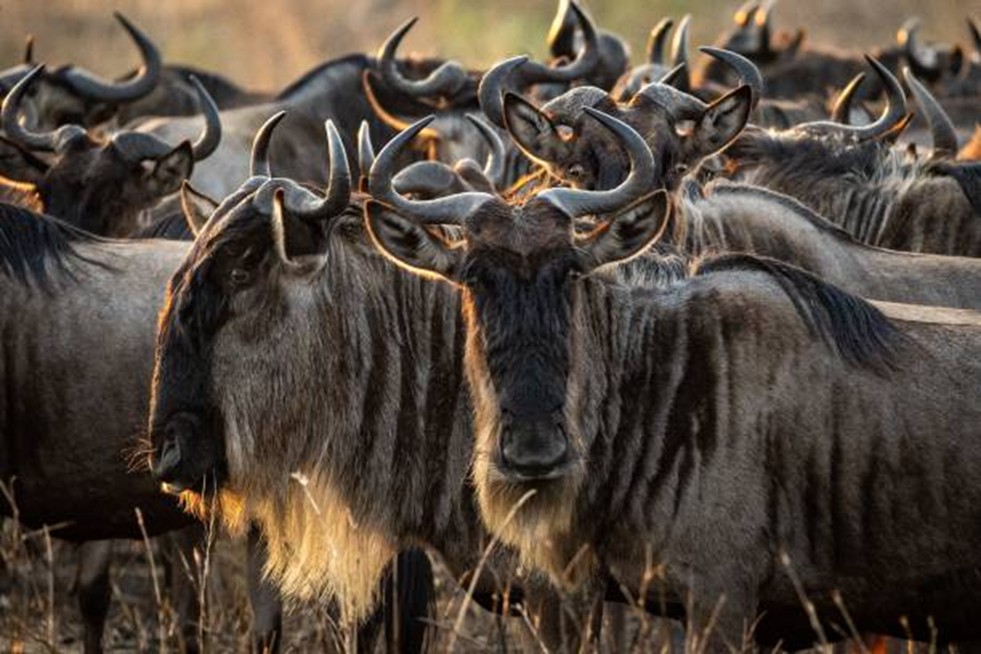
In June, the Central Serengeti turns into a stage of energy and noise. It’s mating season, and male wildebeest fight for the chance to mate with females. You can hear their grunts and see clouds of dust as they clash. This short but powerful season marks the start of the next generation before the herds move north again.
July–Oct
Mara River Crossings – Northern Serengeti
The Most Dramatic Moment!!
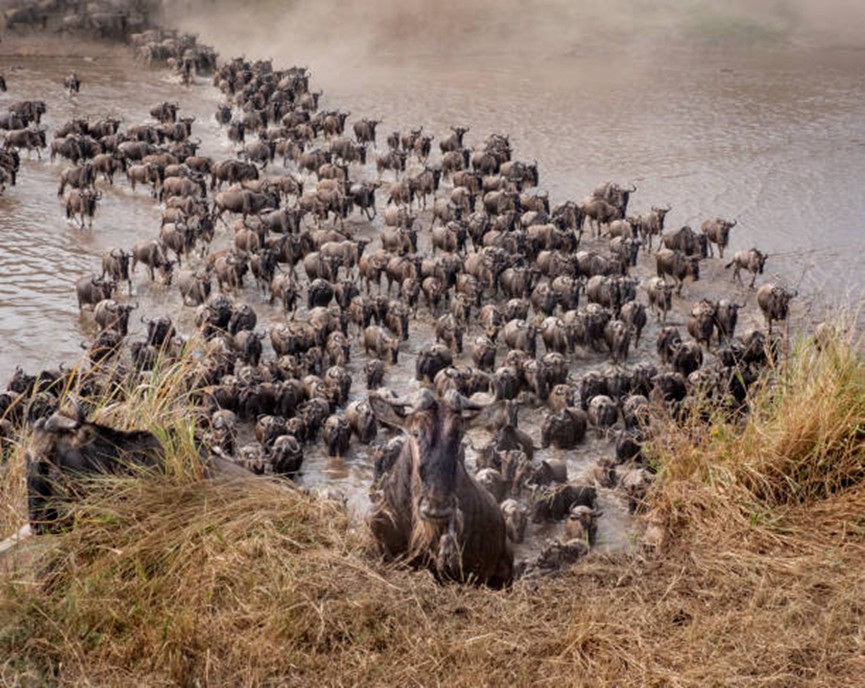
From July to October, the herds reach the Mara River. This is the most famous part of the Great Migration. Thousands of wildebeest and zebras cross the crocodile-filled river in a heart-stopping rush. Some make it, some don’t—but this dangerous journey is part of life in the wild. Watching it is an unforgettable experience of nature’s power and beauty.
Oct–Dec
The Return Journey – Back to the South
The Long Way Home!!
When the short rains return in late October, the herds start their long journey back south. The females are now pregnant, carrying the next generation. Slowly, they move through Central Serengeti toward Ndutu. By December, the plains are green again—ready for another calving season, and the circle of life begins once more.